SAP CPI Implementation: Architecture, Best Practices, and Enterprise Use Cases
Digital transformation doesn’t fail because of weak applications. It fails because systems don’t talk to each other.
As enterprises adopt cloud ERP, best-of-breed SaaS platforms, and industry-specific solutions, integration becomes the invisible backbone holding everything together. Orders, invoices, employee data, suppliers, customers, and partners all depend on reliable, secure, and scalable data movement.
This is where SAP Cloud Platform Integration (SAP CPI) plays a big role. A well-designed SAP CPI implementation doesn’t just connect systems. It orchestrates processes, enforces security, enables automation, and creates the real-time visibility modern enterprises need.
At Rialtes, we help organizations design and implement enterprise-grade SAP CPI architectures that scale with growth, support complex landscapes, and turn integration from a bottleneck into a business accelerator.
Why Integration Is the Backbone of Digital Transformation
Most enterprises today operate in hybrid landscapes that include:
- SAP S/4HANA or ECC
- SAP Ariba and SuccessFactors
- Salesforce and other CRM platforms
- Legacy systems and third-party application
Without a robust integration layer, organizations face:
- Disconnected systems and data silos
- Manual handoffs and duplicate data entry
- Limited end-to-end visibility
- Slow customer and supplier interactions
- Higher operational risk and error rates
SAP CPI addresses this by acting as a centralized integration hub, enabling standardized, secure, and reusable integrations across SAP and non-SAP systems.
What Is SAP CPI and Where Does It Fit
SAP CPI is a cloud-native integration platform that enables:
- Application-to-application integration
- Business process integration
- API-based connectivity
- Event-driven and message-based integratio
It supports a wide range of integration patterns, including synchronous, asynchronous, batch, and event-based flows.
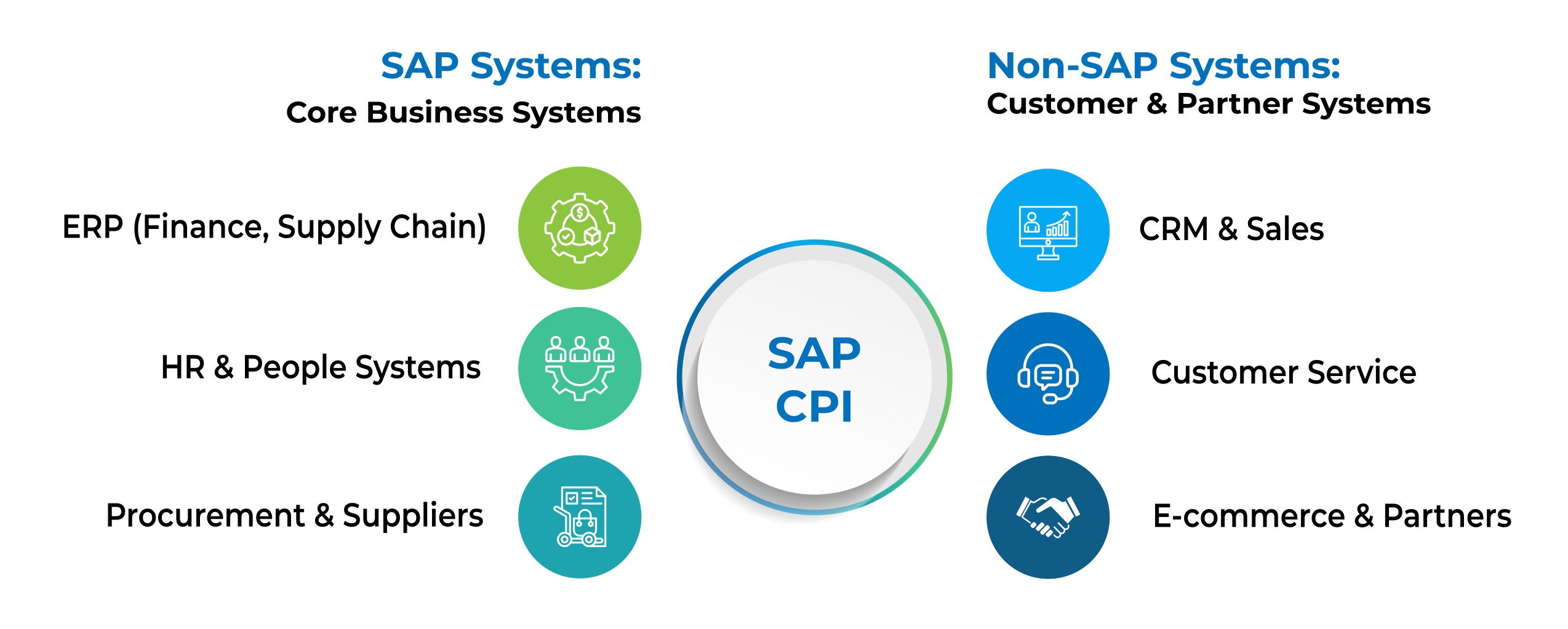
Enterprise landscape diagram with SAP CPI at the center connecting SAP and non-SAP systems.
SAP CPI Architecture: Core Building Blocks
Understanding SAP CPI implementation starts with understanding its architecture.
Integration Flows (iFlows)
Integration flows define how data moves between sender and receiver systems.
They include:
- Message routing logic
- Data transformation steps
- Error handling
- Logging and monitoring
Well-designed iFlows are modular, reusable, and easily extendable.
Adapters
Adapters enable connectivity with different systems and protocols, including:
- OData, REST, and SOAP
- IDoc and RFC
- SFTP and FTP
- JMS and AS2
Message Processing and Transformation
SAP CPI supports message mapping, XSLT, and Groovy scripting to transform data formats between systems. Best practice is to keep transformations simple, well-documented, and centrally governed.
Security and Connectivity
Security is embedded into CPI through:
- OAuth, certificates, and basic authentication
- Secure credential storage
- TLS encryption
- Role-based access control
Connectivity to on-premise systems is handled via SAP Cloud Connector, ensuring secure communication without exposing internal networks.
SAP CPI Implementation Best Practices
A successful SAP CPI implementation is as much about discipline as it is about technology.
Design for Reuse and Scalability
Avoid point-to-point integrations.Build canonical data models and reusable iFlow templates to support future growth.
Standardize Naming and Documentation
Clear naming conventions for packages, iFlows, and artifacts reduce maintenance effort and speed up troubleshooting.
Implement Robust Error Handling
Every iFlow should include:
- Technical error handling
- Business validation checks
- Alerts and notifications
Errors should be actionable, not just logged.
Secure by Default
Use certificates and OAuth wherever possible.
Avoid hardcoding credentials and sensitive data.
Plan for Monitoring and Operations
Leverage CPI monitoring dashboards, message logs, and alerts to ensure integrations remain healthy as volumes grow.
Visual-ready concept:
Best practices checklist mapped to design, build, deploy, and operate phases.
Deployment and Lifecycle Management
A successful SAP CPI implementation doesn’t stop at go-live.It lives and evolves alongside the business. Enterprise integrations typically move through clearly defined environments to protect stability while enabling change:
- Development, where integration flows are designed, built, and enhanced
- Quality / Test, where scenarios are validated, edge cases are exposed, and performance is verified
- Production, where integrations run at scale and support mission-critical operations
- Each environment serves a distinct purpose, and moving changes between them requires discipline. Without strong transport management and version control, even small updates can create unexpected disruptions downstream.
- At Rialtes, we implement structured lifecycle management practices that reduce risk and increase confidence:
- Controlled deployment pipelines that manage transports between environments with full traceability
- Version-controlled integration artifacts, ensuring changes are documented, auditable, and reversible
- Automated testing strategies that validate message flows, data mappings, and error handling before production release
- Clear rollback procedures that allow teams to restore stable versions if issues arise quickly
This approach ensures integrations can be enhanced continuously without compromising reliability. As business processes evolve, systems are added, or volumes increase, SAP CPI remains stable, predictable, and ready to scale.
Enterprise Use Cases for SAP CPI
SAP S/4HANA Integration
- Real-time master data synchronization
- Order-to-cash and procure-to-pay integration
- Financial postings and reporting
SAP Ariba Integration
- Supplier onboarding
- Purchase orders and invoices
- Contract and sourcing data exchange
SAP SuccessFactors Integration
- Employee master data replication
- Organizational structure updates
- Payroll and third-party HR system integration
Salesforce Integration
- Customer and account synchronization
- Order and billing data exchange
- Service and case data integration
Hybrid and Third-Party Systems
- Oracle, Workday, legacy ERP
- Banking and payment gateways
- Logistics and partner platforms
These integrations enable true end-to-end business processes instead of disconnected transactions.
Integration Is the Difference Between Digital and Truly Connected
- Digital transformation isn’t about adopting more systems.
It’s about making them work together intelligently. - A well-executed SAP CPI implementation gives enterprises the integration backbone needed to scale automation, unlock real-time insights, and deliver seamless business experiences. With the right architecture, best practices, and execution partner, integration stops being a constraint and starts becoming a competitive advantage.
- SAP CPI provides the foundation for:
- Event-driven processes
- Real-time data pipelines
- API-led architectures
- Intelligent workflows
Without a strong integration layer, automation initiatives stall and AI lacks reliable data.
How Rialtes Delivers SAP CPI at Enterprise Scale
- At Rialtes, SAP CPI implementation is not treated as a technical afterthought. It’s treated as a strategic foundation.
- Our approach includes:
- Integration strategy and architecture design
- End-to-end SAP and non-SAP connectivity
- Security-first implementation
- Performance and scalability planning
- Post-go-live support and optimization
With proven experience across SAP Ariba, S/4HANA, SuccessFactors, Salesforce, and complex hybrid landscapes, we help enterprises move faster without compromising stability.